The Benefits of Sealing and Repairing Ductwork in Older New Jersey Homes
September 12, 2026
The Breakdowns We See Most in July and August
Frequently Asked Questions
Quick Answer: In a typical older New Jersey home, 20 to 30 percent of the air moving through the duct system leaks out before it ever reaches a supply register, according to ENERGY STAR. That loss happens at cracked duct tape, disconnected joints, and gaps left behind by decades of additions, furnace swaps, and settling. Sealing those leaks with mastic sealant and repairing damaged or separated sections restores lost efficiency, evens out room-to-room temperatures, cuts down on dust pulled in from attics and crawlspaces, and takes pressure off a furnace or air conditioner that has been quietly overworking for years. Insulating any ductwork that runs through an unconditioned attic or crawlspace adds another layer of protection against heat gain and loss. None of this requires new equipment. It requires finding where the system is actually losing air and fixing it.
You flip the thermostat down five degrees on a July afternoon in a Denville colonial, and the downstairs finally cools off while the two bedrooms over the garage stay stuffy no matter how long the air conditioner runs. Down in the crawlspace, the flexible duct feeding those rooms has a seam where the foil tape gave up years ago, and a thin stream of conditioned air is pouring out into the dirt and insulation instead of reaching the vents upstairs. Nobody notices this kind of leak from inside the house. You just notice that one part of the home never quite catches up.
This is a common story in the older housing stock scattered through Boonton, Boonton Township, Lincoln Park, Parsippany-Troy Hills, and the rest of Morris County. Homes built in the 1950s through the 1980s, plus plenty of older colonials that predate that, were built with duct systems designed for the furnace or boiler of their era. Many of those systems have been touched since then only when the furnace itself got replaced. The ductwork underneath the floors, tucked into crawlspaces, or running through unconditioned attics rarely gets a second look. Over the years, air sealing quietly fails and nobody notices until the comfort problems and the utility bills make it obvious.
Why Older New Jersey Homes Lose So Much Conditioned Air
Duct systems are built from short sections joined together, and every joint is a place where air can escape. In a newly built system, those joints are tight. Decades later, that is rarely still true.
Duct Tape Breaks Down Long Before The Ductwork Does
Fabric-backed duct tape was standard practice for decades, and it remains common in Morris County crawlspaces and attics. Its adhesive dries, backing peels, and joints loosen. ENERGY STAR recommends never using duct tape as a permanent seal.
Additions And Renovations Leave Disconnected Sections Behind
Finished basements, kitchen additions, and converted attics often require ductwork changes. During renovations, branches may be rerouted or extended without properly sealing new connections. In crawlspaces, modified ducts are sometimes left wedged together, allowing air leakage and poor performance.
Furnace Conversions Can Leave Ductwork Mismatched To Newer Equipment
Many Morris County homes converted from oil to gas heating while keeping existing ductwork. Although older ducts can remain functional, equipment changes may disturb connections. Some joints are never properly resealed afterward, leaving gaps that reduce airflow and increase energy waste.
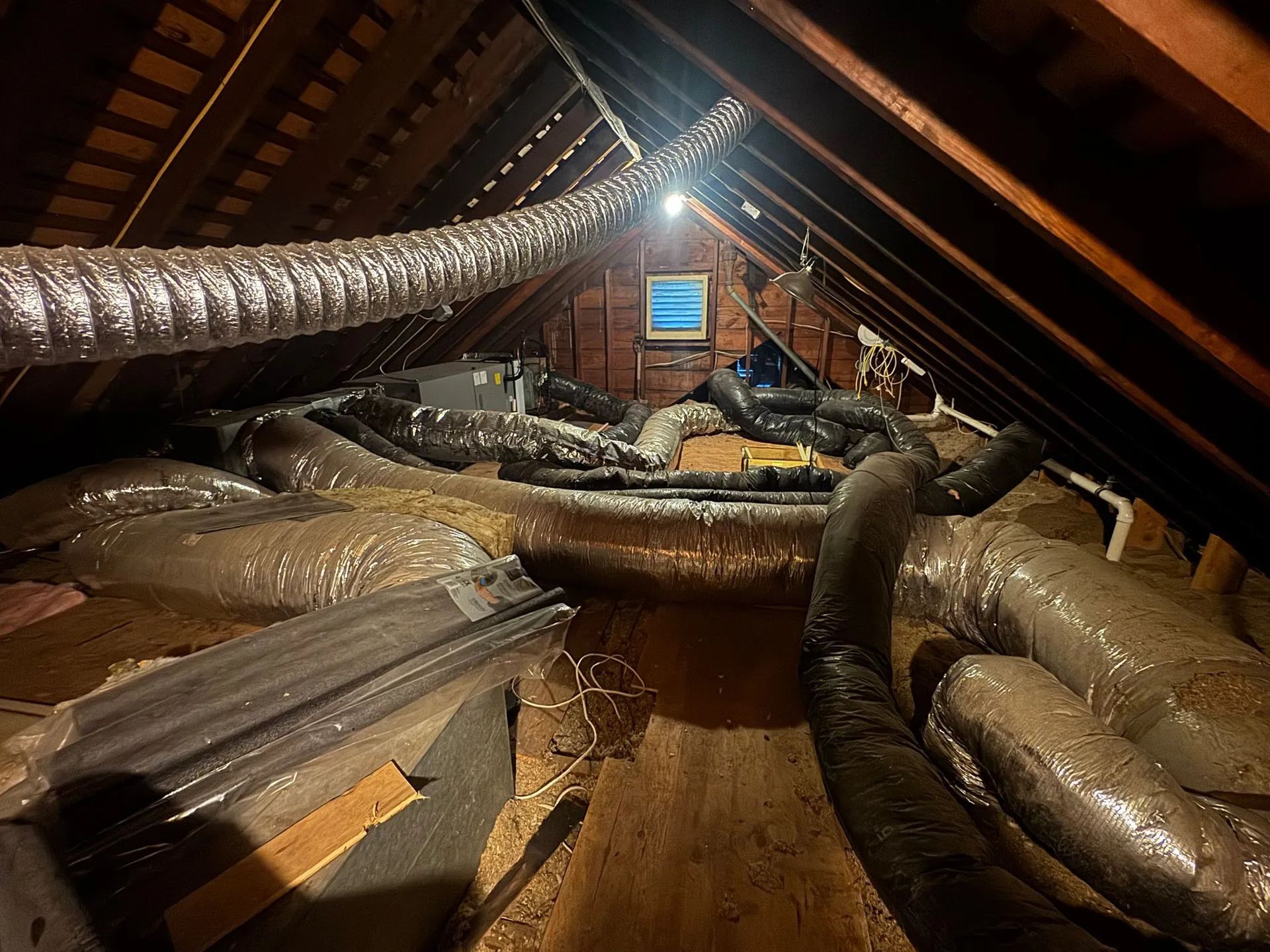
Crawlspaces And Attics Are Hard On Materials
Ducts running through unconditioned crawlspaces face moisture, temperature fluctuations, and occasional pests. Attic
ductwork experiences extreme summer heat and winter cold. These conditions accelerate deterioration of tape, mastic, metal, and flexible materials, while hidden damage often remains unnoticed.
What Unsealed Ducts Actually Cost You
The energy loss numbers get attention, but the day-to-day experience is usually what a homeowner notices first.
Rooms That Never Quite Reach The Thermostat Setting
When a duct branch leaks before reaching its register, that room receives less airflow than designed. In two-story Morris County homes, upstairs bedrooms often lag behind, particularly those farthest from the furnace or located directly above unheated garages during extreme weather.
Humidity That Lingers In Summer, Dryness That Lingers In Winter
Escaping conditioned air forces the system to run longer, while leaky return ducts can pull humid crawlspace air indoors. During summer, this creates muggy rooms; winter leaks can contribute to excessive dryness. Uneven comfort often signals ductwork problems.
Equipment That Works Harder And Wears Out Faster
A furnace or air conditioner compensates for air lost through poorly sealed ducts by running longer and cycling more frequently. Over time, this added workload increases wear on components such as blower motors and compressors, potentially shortening equipment life.
Backdrafting And Indoor Air Quality Risks
Leaky ductwork can create pressure imbalances that contribute to backdrafting, allowing combustion gases from furnaces, water heaters, or dryers to enter living spaces. Leaky return ducts can also draw dust, insulation fibers, and contaminants from attics or crawlspaces into household airflow.
WARNING:
If you smell combustion odors near a furnace or water heater, or notice soot near an appliance, stop and have your ductwork and venting inspected by a professional before doing anything else. Backdrafting is a safety issue, not just a comfort one.
The Real Benefits of Sealing and Repairing Ductwork
Fixing leaky, damaged, or disconnected ductwork does not require new equipment. It means finding where the system is actually losing air and closing those gaps, then reinforcing the sections that have come apart.
Comfort Evens Out From Room To Room
Once the branch feeding upstairs bedrooms is sealed and reconnected, designed airflow reaches each register properly. Rooms that always lag behind can keep pace with the rest of the house without lowering the thermostat or running equipment longer.
Efficiency Gains You Can Feel Over A Full Season
ENERGY STAR reports that leaky ducts can cause efficiency losses of up to 20 percent. Sealing leaks keeps more conditioned air inside, helping equipment deliver heating or cooling directly to living spaces throughout Morris County seasons.
Less Strain On The Equipment Itself
A properly sealed duct system helps heating and cooling equipment reach the thermostat setting and cycle normally. Shorter, complete cycles reduce unnecessary workload on blowers and compressors, potentially minimizing breakdowns while extending the service life of installed equipment.
Cleaner Air Moving Through The House
Sealing return ducts running through dusty attics or damp crawlspaces reduces contaminants entering the system before filtration. Less unfiltered air can mean reduced dust around furniture and registers, while potentially helping maintain cleaner indoor air throughout your home.
TIP: If you're not sure whether your ductwork is the culprit behind an uneven or dusty home, ask for a duct leakage test before committing to any repair work. It measures the actual leakage rate and pinpoints where the losses are happening, rather than guessing.
What Professional Duct Sealing and Repair Actually Involves
Sealing ductwork properly is a specific process, not a matter of wrapping more tape around a joint.
Finding The Leaks First
A duct leakage test pressurizes the system and measures escaping air before it reaches registers. This identifies problem sections precisely, allowing technicians to target repairs instead of resealing everything. It also establishes a baseline for measuring improvement.
Mastic Sealant, Not Tape, On Accessible Joints
Mastic is a flexible sealant applied with a brush or glove that bonds to sheet metal and flex duct. Unlike fabric tape, it resists drying and cracking, making it suitable for accessible joints, seams, and connections.
Repairing Or Reconnecting Sections That Have Separated
Separated joints, torn flex duct, or loosely connected branches require proper reattachment and support, not simply sealing gaps. Crushed or kinked flex duct generally needs replacement because restricted airflow cannot be corrected by sealing alone.
Insulating Ductwork That Runs Through Unconditioned Space
Ducts through uninsulated attics or crawlspaces lose heat through their walls, separate from leakage. Insulation reduces this transfer and helps conditioned air maintain its intended temperature. Sealing prevents air loss, while insulation limits temperature changes.
Retesting To Confirm The Fix Worked
A second leakage test after repairs confirms whether the system's leakage rate actually improved. Rather than assuming the work succeeded, technicians can compare results with the original baseline and verify that targeted sealing and repairs delivered measurable improvement.
Frequently Asked Questions
How do I know if my ductwork is leaking conditioned air?
The clearest signs are rooms that never reach the thermostat setting, a system running constantly, and unusually high utility bills. Ductwork in attics or crawlspaces usually leaks the most often.
Can duct sealing help with humidity problems in an older New Jersey home?
Often, yes. When conditioned air escapes, the air conditioner runs longer, and that extra runtime is what removes humidity. Leaky return ducts pulling in humid crawlspace air work against it.
Is duct sealing worth it if I'm not replacing my furnace or air conditioner?
Yes. Duct sealing works on whatever equipment you already have and isn't tied to a replacement. It's often more cost-effective than installing larger equipment to compensate for wasted air loss.
How long does professional duct sealing and repair take?
It depends on the scope of the issue and how accessible the ductwork is. Accessible leaks can often be tested, sealed, and retested in one visit. Extensive damage takes longer.
Can I seal my own ductwork, or does it need a professional?
Homeowners can seal accessible joints themselves with mastic or rated foil tape, never standard duct tape. But hard-to-reach leaks and combustion appliance risks are usually worth a professional evaluation first.
Does sealing ductwork help with dust and allergies?
It can, especially on the return side. Return ducts running through a dusty attic or crawlspace pull in unfiltered air. Sealing those leaks reduces dust, which allergy-sensitive households often notice.
Comfort Depends on What You Can't See
A duct system rarely announces its own decline. It just quietly stops delivering what the furnace and air conditioner are already paying to produce, one loose joint and one dried-out seam at a time. Sealing and repairing that hidden network changes what a home actually feels like from room to room, evening out the temperature swings that thermostats alone can't fix. None of it requires new equipment, only attention to the parts of the house nobody thinks to check.
Brandy's Heating & Cooling
has spent 17
years working through the crawlspaces, attics, and basements of Boonton, NJ, and surrounding areas, and that experience shows in how thoroughly a system gets diagnosed before any sealant goes on. Older homes hide their leaks well, but not from someone who knows where to look. Fixing what's already there, rather than replacing it, is usually the simplest path back to a home that heats and cools the way it was built to.